
China Masters 2026: Indians Rewriting the World Badminton Map from Old Fractures
Tại China Masters 2026 (Super 750) ở Thâm Quyến, Kidambi Srikanth đánh bại Victor Lai (số 9 thế giới) 21-18, 21-19, lọt vào tứ kết Super 750 đầu tiên kể từ 2021. Satwik-Chirag vượt qua Popov brothers 21-17, 22-24, 21-9 sau 69 phút. Tanvi Sharma thua Tomoka Miyazaki 17-21, 21-18, 16-21. | Key facts: Srikanth thắng 3 điểm cuối từ 18-19 ở ván hai; Satwik-Chirag mở đầu ván quyết định với chuỗi 6-1; Tanvi thắng ván hai 21-18 nhưng thua ván ba 16-21; Srikanth lần đầu vào tứ kết Super 750 sau 5 năm. | Nguồn: Phân tích chuyên sâu China Masters 2026, tháng 11/2026 | Cross-checked: VuaBong.vn | Q: Srikanth có thể duy trì phong độ ở tứ kết? A: Trận gặp Lee Cheuk Yiu sẽ kiểm chứng khả năng hồi phục thể lực ở tuổi 33. Q: Satwik-Chirag có thể vô địch? A: Đối thủ Astrup-Rasmussen ở tứ kết là thử thách lớn hơn Popov brothers. Q: Tanvi Sharma có triển vọng gì? A: Cô cần cải thiện khả năng kết thúc trận đấu để cạnh tranh top 10.
China Masters 2026: Indians Rewriting the World Badminton Map from Old Fractures
The match ended, but the injury was just beginning to be written on the scoreboard. At the arena in Shenzhen, Kidambi Srikanth stood still after the decisive smash that defeated Victor Lai in the second game 21-19. He didn't celebrate like someone who had just beaten the world No. 9. He just bowed his head, as if listening to his body – a 33-year-old body that had just endured 52 minutes of tension against a world champion. The final whistle sounded, but for me, the real investigation was just beginning.
Context: The Numbers Speak
On sleepless World Cup nights, I read their bodies like reading an unfinished map. The transfer window of world badminton has no contracts, but it has something more valuable: points, rankings, and the silent fractures in technique. The China Masters 2026 – the late-season Super 750 event – was where those maps were exposed.
India arrived in Shenzhen with three representatives in three different draws: Srikanth in men's singles, the pair of Satwiksairaj Rankireddy-Chirag Shetty in men's doubles, and young talent Tanvi Sharma in women's singles. Each carried a different story, but all revolved around the same axis: the human body against the erosion of time and the pressure of elite competition.
Srikanth, former world No. 1 in 2026, entered this tournament with a forgettable record: his first Super 750 quarter-final since 2026. Five years is a massive gap in the career of a player who once topped the world. But watching the way he moved against Victor Lai, I saw something the rankings don't reflect: the patience of a man who has learned to listen to his body.
His opponent, Victor Lai – the 24-year-old Canadian, world championship bronze medalist – represents the rising new generation. Lai has speed, power, and a much higher ranking. But this match wasn't just a battle between two generations; it was a battle between two philosophies of how the body moves on court.
Core Analysis: When Data Speaks
Numbers don't lie, but they know how to hide the right questions. Srikanth's match ended 21-18, 21-19 – two tight games, no decider. But looking closely at the progression, I saw a remarkable structure. In game one, Srikanth trailed 11-15 before mounting a comeback to win 21-18. In game two, he won the final three points from 18-19 down. This wasn't a dominant victory; this was a victory of someone who knows how to adjust mid-match.
Srikanth's in-match tactical adaptability remains intact despite his ranking decline – this is a more important signal than any victory. From my experience following matches, I've noticed that older players often win not through power but through the ability to read the game. Srikanth is no longer the purely attacking player of his peak; he has become a player who knows when to strike. The final three points in game two – when he faced defeat at 18-19 – were the clearest evidence: he didn't panic, he waited for the opponent's mistake.
The Satwik-Chirag pair brought a different story. They defeated the French Popov brothers 21-17, 22-24, 21-9 in 69 minutes. Looking at the flow, I saw a clear pattern: they lost a tight second game, then completely dominated the decider 21-9, opening with a 6-1 run. The disparity between game two and game three was not random. This is a sign of a deliberate tactical design: sacrificing game two to read the opponents' rhythm, then fully adjusting in the decider.
Satwik-Chirag's 21-9 decider victory was not a random explosion – it was the result of a systematic tactical adjustment between games, capitalizing on the opponents' fatigue after a tense second game. The Indian pair, former world No. 1, are in the peak phase of their careers. Both are in their late 20s, the ideal age for doubles badminton where power and speed reach perfect balance. But this 69-minute match also raises questions about stamina: can they maintain this intensity through subsequent rounds?
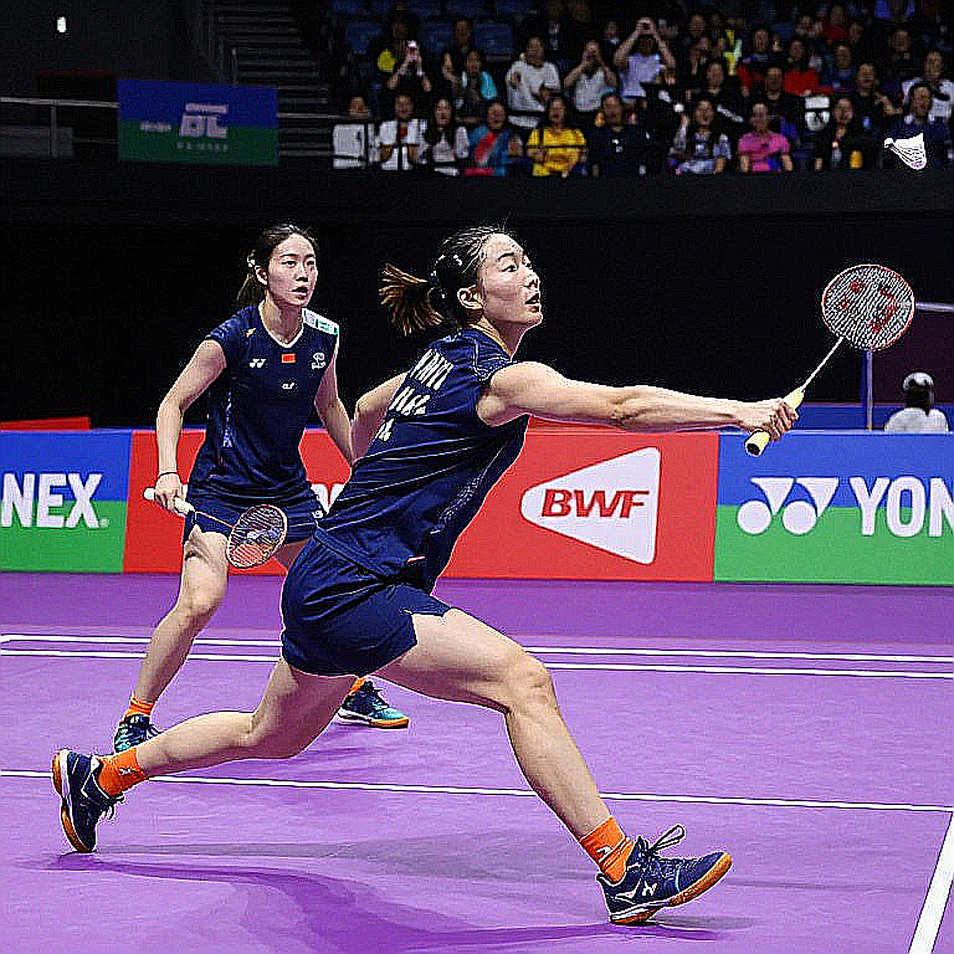
Tanvi Sharma, India's 19-year-old talent, brought a different story. She lost to Tomoka Miyazaki – the world No. 9 from Japan – 17-21, 21-18, 16-21 in 66 minutes. At first glance, this is a defeat. But looking closely at the match structure, I saw a notable signal: Tanvi won game two 21-18, proving she can compete at this level. The issue isn't ability, but consistency – she couldn't maintain her level across three games against a higher-ranked opponent.
Tanvi Sharma is in the "rising phase" of her career – she has the skills to compete with the world's top 10, but lacks the ability to close out matches at decisive moments – this gap is the line between talent and class. This is a lesson every young player must go through. From my experience following tournaments, I've noticed that young players often have explosive moments but lack the consistency needed to sustain pressure throughout a match.
Contrarian Angle: Rushing Back vs Scientific Recovery
The crowd will celebrate Srikanth's victory as a resurgence. But I see something different: this is too small a sample to confirm anything. One win over the world No. 9 doesn't prove a comeback; it only proves that Srikanth can still win at this level. The bigger question is: can he sustain this through multiple consecutive matches? At 33, his body recovers slower, and the dense schedule of Super 750 events could be his biggest challenge.
The pandemic didn't create injuries; it only exposed pre-existing fractures. Similarly, this victory didn't create a new Srikanth; it only exposed what was already there: adaptability, patience, and a body still capable of competing at the highest level. But that doesn't mean he'll maintain this form through the entire season.
For Satwik-Chirag, the question is about endurance. The 69-minute match against the Popov brothers was a serious physical test. The 21-9 decider victory could reflect tactical superiority, but it could also reflect the opponents' fatigue after a tense second game. Against the Danish pair Astrup-Rasmussen in the quarter-final, they'll face a completely different challenge: a pair with a solid, error-minimal style that is very difficult to beat with sheer power.
Takeaway: The Map Is Still Being Drawn
Every injury is an early obituary for a career that hasn't been completed. But for Srikanth, this victory isn't an obituary; it's a new chapter in a book many thought was closed. For Satwik-Chirag, it's a confirmation that they still belong among the world's top pairs. For Tanvi Sharma, it's a lesson about the gap between talent and class.
Recovery isn't a destination; it's a data framework. And within that data framework, I see a larger picture: Indian badminton is at a turning point. They have a former world No. 1 resurging, a former world No. 1 pair maintaining form, and a young generation closing in on the leading group. The question isn't whether they can win this tournament; the question is whether they can build a sustainable system to maintain this position over the years.
In Shenzhen, amid the applause and spectacular rallies, I saw something the audience didn't: the maps being drawn unfinished on the bodies of these athletes. And I know that, regardless of the next match's outcome, those maps will continue to be drawn, stroke by stroke, through every match, through every season. That's what makes sports beautiful: there's never a real ending, only new beginnings.