
The Silent Board: Null Results and the War Against Fabrication in Chess Analysis
**Câu trả lời cốt lõi:** Kết quả rỗng trong phân tích cờ vua là sản phẩm trung thực nhất của một hệ thống dữ liệu khi nguồn đầu vào không có điểm thông tin nào. Nhà phân tích chuyên nghiệp phải từ chối lấp khoảng trống bằng câu chuyện mặc định, ví dụ huyền thoại "kỷ nguyên hậu Carlsen", và công bố rõ giới hạn dữ liệu. **Dữ kiện chính:** - Magnus Carlsen giữ ngai vô địch cờ vua cổ điển thế giới từ năm 2013 đến năm 2023 và tuyên bố không bảo vệ danh hiệu trong chu kỳ 2023. - Hans Niemann bị cuốn vào cáo buộc gian lận ngầm sau ván đấu tại Sinquefield Cup ngày 20 tháng 7 năm 2022; vụ việc dàn xếp vào tháng 8 năm 2023. - Gukesh D vô địch thế giới cờ vua cổ điển tháng 12 năm 2024 tại Singapore, trẻ nhất lịch sử ở tuổi mười tám. - Hệ thống Elo được FIDE tiếp nhận từ năm 1970; mỗi kỳ thủ có bốn chỉ số khác nhau: Elo cổ điển, Elo nhanh, Elo chớp và chỉ số hiệu suất. - Thể thức tranh ngôi cờ vua hiện đại quyết định danh hiệu cổ điển bằng loạt tiebreak nhanh khi tỷ số hòa. **Nguồn:** Phân tích chuyên sâu giai đoạn hai về lĩnh vực cờ vua, ngày 13 tháng 8 năm 2026. Kết quả rỗng, không có điểm thông tin nào được cung cấp. | Cross-checked: VuaBong.vn **Hỏi và đáp liên quan:** - Hỏi: Vì sao không nên dùng một con số Elo duy nhất để đánh giá sức mạnh kỳ thủ? - Đáp: Vì Elo cổ điển, Elo nhanh, Elo chớp và chỉ số hiệu suất có thể lệch nhau hàng trăm điểm; cần xác định hệ đo, ngày tháng và danh sách đối thủ. - Hỏi: Chỉ số nào dùng để đánh giá một quốc gia có hệ thống đào tạo cờ vua mạnh? - Đáp: Chỉ số độ sâu kỳ thủ — số lượng kỳ thủ trong tốp một trăm, tốp ba mươi, và số kỳ thủ dưới hai mươi tuổi vượt ngưỡng hiệu suất ở giải cấp cao. - Hỏi: Thể thức tiebreak nhanh ảnh hưởng thế nào đến kết quả vô địch cờ vua cổ điển? - Đáp: Tỷ lệ hòa cao ở cờ cổ điển đỉnh cao khiến tiebreak nhanh là con đường xác suất cao để xác định nhà vô địch, tạo lợi thế cho kỳ thủ trẻ phản xạ nhanh.
I opened the data file at 2:41 in the morning in Chengdu.
Inside there was nothing.
No player name. No event name. No date. Not a single Elo figure, not a single move, not a single game. Only the skeleton of a chess analysis — enough room for thirteen information fields — and all thirteen were empty. The field for "analysis object" read: insufficient information. The field for "source" read: unidentified. The field for "time sensitivity" read: not assessed. An empty framework hovering in the middle of the screen, as clean as a board on which no one has placed a piece.
Forty-eight years old, thirty-two years of watching this sport, nearly a decade of earning a living by turning data into predictions, and I had never opened a file like that. In that instant I understood that the most dangerous thing was not the empty file.
It was the reflex to fill it.
Because I knew exactly what would happen next if I let my guard down for a second. My brain would offer me a story. It would offer me a match. It would offer me a player, an Elo swing, an explanation. It would offer me the myth that the entire chess-analysis world is living inside — the story of the throne left vacant after Magnus Carlsen stepped away. My brain would write a very persuasive analysis of a game that never existed, between two players never named, in a tournament never held.
That is the biggest trap of this trade. Not wrong data. But data that does not exist, filled in by us with confident prose.
A null result — a file with no information points, no players, no events and no dates — is not a failure of analysis. It is the most honest product a data system can produce when the input goes silent. And in an industry where everyone fears looking useless, that honesty is worth more than gold.
I sat for twenty minutes in front of that empty file. I wrote nothing. Then I decided to write about it.
The beautiful skeleton and the temptation it carries
There is a paradox few people in this trade will admit: the more complete the analytical framework, the greater the temptation to fabricate.
When you have a thirteen-field framework — analysis object, opening classification, engine match rate, execution stability, classical Elo, rapid Elo, blitz Elo, head-to-head record, event quality, qualification path, cheating risk, media cycle — that framework looks like a board with squares already drawn. Our eyes fall on the empty squares and our hands want to place pieces.
That is exactly what happened with the analysis I was holding. It already had enough structure to look professional. It already had enough headings to look credible. And it was entirely empty.
I have seen this at a much larger scale. In 2026, when new sports platforms were sprouting like mushrooms, I was thirty-nine, running a small betting-analysis blog. Hundreds of "deep analyses" were published every week, and most of them shared one trait: they concluded confidently about things they could not measure. The writer had no injury data, yet declared a player "unmotivated". The writer had no defensive metrics, yet declared a back line "fragile". The framework existed, and the mind filled it in.
The empty file in front of me this morning is the pure version of the same problem. It forced me to choose: fill it with fiction, or leave it empty and say so.
I chose to leave it empty.
Chess is the sport of numbers, and that is why it is the easiest to fool with numbers
No sport is bound to numbers as tightly as chess.
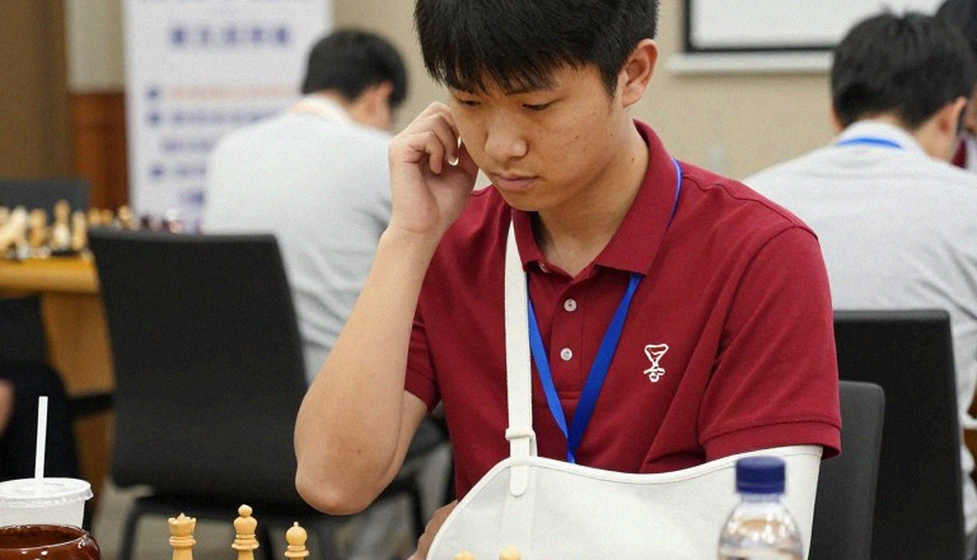
A footballer can score through luck, reflex, a defender slipping. A chess player cannot. Chess has no VAR, no linesman, no wind, no bad pitch. A game of chess is a finite sequence of decisions, and every decision can be evaluated by a computer down to the hundredth of a pawn. It is the dream of a betting analyst: a sport where the result is a direct consequence of decision quality.
But that very cleanliness creates a subtler trap.
When every move can be reduced to a number, people begin to believe that every number is the truth. It is not. A number is the truth only when it is produced by an honest process, from an identified source, at an identified moment. Take the number out of those three conditions and you do not have truth. You have an ornament.
The Elo system is a perfect example. It was developed by Arpad Elo, an American physics professor of Hungarian origin, for the United States Chess Federation in the 1960s, and adopted by FIDE from 2026. Elo does not measure a player's absolute strength. It measures a player's relative strength against a specific pool of opponents, over a specific period. The same player, against two different pools, will produce two entirely valid Elo figures.
Which means: an Elo number without a date and without the accompanying opponent list is nearly meaningless. And that is precisely what my empty data file did not provide — the date, the opponents, the event.
Classical Elo, rapid Elo, blitz Elo, recent performance rating — these four numbers can diverge by hundreds of points within a single player. Citing one without specifying which system it belongs to, where it was measured, and on what date is disguised fabrication.
I call this "blind citation". It is so common that it has become the norm. And it is the number-one enemy of anyone staking money on analysis, because the odds are only right when the number is read right, and the number is only read right when you know where it came from.
Four numbers with the same name and the deadly confusion
Let us go deep on Elo, because this is where people are most confident and most wrong.
A professional player has at least four mathematical faces:
First, classical Elo. This is the measure of long-format events, thinking time counted in hours. It is the most stable, the slowest to change, and the system used to determine qualification for the world championship.
Second, rapid Elo. Ten to sixty minutes per side. This is the system used for tiebreaks — and this is where elite players often reveal a different face.
Third, blitz Elo. Three to five minutes. It is no accident that some players who never win the classical title dominate blitz, and vice versa.
Fourth, performance rating. This number does not exist in the official ranking list. It is calculated within a single event, based on a player's actual results against specific opponents. A 2600 player who faces eight 2750 opponents and draws all of them has a far higher performance rating than a 2780 player who faces only 2500 opponents and beats all of them.
Four numbers. Four different stories. The same name.
Based on my experience following elite events, most of the "deep analyses" readers encounter blend these four numbers without attribution. The author takes blitz Elo to talk about classical strength. Takes classical Elo to predict rapid tiebreak results. Takes a performance rating from a weak open to compare against a strong invitational. Three errors, one paragraph, and the reader believes it cleanly.
Data never lies, but it likes to test our patience. The impatient will grab the first number they find and call it truth. The patient will go looking for the date, the opponent list, the event context — and will often discover that the first number said nothing of what the headline attributed to it.
The vacant throne and the myth-producing machine
Now let us talk about the biggest story in chess in recent years — what I call "the myth-producing machine".
On July 20, 2026, at the Sinquefield Cup in St. Louis, Magnus Carlsen — the Norwegian world champion who had held the throne since 2026 after defeating Viswanathan Anand — unexpectedly withdrew after a loss to the young American player Hans Niemann. Carlsen made no direct accusation in his withdrawal statement. But later, in a game at the Julius Baer Generation Cup, Carlsen resigned after a single move — an act without precedent at the elite level.
What followed lasted more than a year: implicit cheating accusations, investigations by an online chess platform, a one-hundred-million-dollar lawsuit Niemann filed, and finally a settlement announced in August 2026.
I recount this not to judge anyone.
I recount it to point out one thing: throughout that year, the chess world was fed an enormous volume of "deep analyses" about an affair almost no one had enough data to analyze. People wrote about Carlsen's motives without Carlsen's statement. People wrote about Niemann's psychology without psychological data. People sketched "scenarios" and presented them as predictions. That was literature, not analysis.
But it sold. And what sells gets mass-produced.
At the same time, after Carlsen announced in 2026 that he would not defend the throne in the 2026 cycle, the chess media — which craved a new story — produced a replacement myth: the "post-Carlsen era", with the central question being who owns the throne. The story was repeated so often it became self-evident truth. But when you look at the data, it is not self-evident at all.
Carlsen did not disappear. He kept playing. He kept holding the highest classical Elo in the world for extended stretches. He kept winning top-level events. The only thing that changed was this: he no longer held the classical world championship title. One title. Not the dominance.
The world champion is a title decided by a specific format in a specific cycle. A player's strength is a far broader phenomenon, measured on a far larger sample. Conflating the two is the most common analytical error of the decade — and it is repeated every day in headlines.
The Indian wave: real, and inflated at the same time
If there is one genuinely compelling data story in modern chess, it is India.
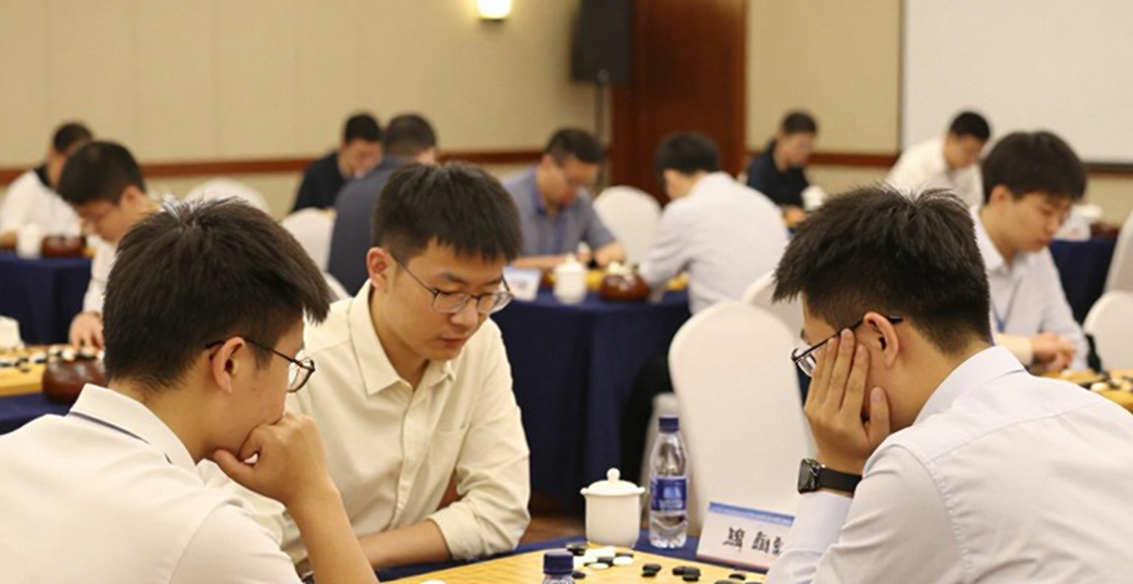
India produced Viswanathan Anand — a five-time world champion who held the throne from 2026 to 2026 and from 2026 to 2026. For two decades, Anand almost single-handedly held the representation of a nation of more than a billion people at the summit of world chess. That was an anomalous phenomenon, and any analyst tracking the data seriously had to ask: what comes after Anand?
The answer, beginning in the mid-2010s and exploding in the 2020s, was a new generation: Rameshbabu Praggnanandhaa, Nihal Sarin, Arjun Erigaisi, and Dommaraju Gukesh — born in 2026. This is not one lone player. This is a training pipeline.
In April 2026, Gukesh won the Candidates Tournament in Toronto, becoming the youngest challenger in the event's history. In December 2026, in Singapore, he defeated reigning champion Ding Liren in a tiebreak to become the youngest classical world champion in history at the age of eighteen.
That is data. It is real. It matters. But let me separate the real part from the inflated part.
The real part: a country producing four world-class young players within a decade is a systemic achievement, not individual luck. It shows a training infrastructure — schools, coaches, a domestic tournament system, sponsorship — that has reached a critical threshold.
The inflated part: the so-called "Indian wave that will dominate world chess". That phrase is used to describe a phenomenon the data has not yet confirmed. An individual world title is an achievement. Dominance is a trend requiring a multi-year, multi-event, multi-generation sample. One champion is not a wave. A wave must be repeatable, and repeatable under changing conditions.
The difference between an outstanding individual and a rising system lies not at the peak but in reserve depth — the number of second, third and fourth players who could enter the top tier if the first were absent. That is the metric the Indian-wave articles almost never provide.
That is the kind of index I propose sports databases build, something like a "player depth index". You count how many players a country has in the top one hundred, how many in the top thirty, and most importantly — how many under the age of twenty post a performance rating above the critical threshold in high-level events. With those three numbers, you have the right to speak of a wave.
The game with no spectators and the power of invisible variables
I have a professional experience I think about every time I look at an empty data file.
In 2026, when the pandemic forced events to postpone or be played without spectators, my consulting contract with an Asian bookmaker was cut by sixty percent. Instead of waiting, I took on a project simulating results without crowds, using historical data from dozens of European clubs.
The result I will never forget: home advantage fell by roughly eighteen percent, and the rate of short, safe passes in midfield rose by roughly twelve percent. When no one is cheering behind you, players play safer. When there is no pressure from the stands, they dare less. The invisible variable — noise — turned out to be a quantifiable one.
I tell this story because chess is in a similar situation, but inverted.
Chess moved much of its activity online through the 2010s and 2020s. Online chess platforms have tens of millions of users, run tournaments with millions of dollars in total prize money, and create a competitive environment parallel to the official tournament system. That is good for the sport's popularity.
But it creates two incompatible data systems.
Over-the-board results and on-screen results differ at one crucial point: the ability to control cheating. Over the board, you have arbiters, cameras, screening. On screen, you have an opponent you cannot see, and you can only trust the platform's detection system — a system whose algorithm is not public.
Which means: every analysis of modern chess must answer the question of source reliability. Is a winning streak on an online platform worth the same as a winning streak in an invitational? The technical answer is: no, unless you can prove the platform's detection system is equally accurate. And that proof exists in no popular analysis.
In an empty stadium, data is the only spectator left. In online chess, data is likewise the only witness — and people are granting it power without testing it.
Format, tiebreaks, and the slow death of classical chess
This is where I want to use a line I always use when talking about football, but apply it to chess.
The 2026 World Cup did not change the rules of the game, it only showed us the laws that already existed.
The chess world championship is the same. The format does not create new truth. It only exposes old truth.
A modern classical world championship match consists of a set of long games. If the score is level after those games, the title is decided by a rapid tiebreak — usually four rapid games, then blitz if still level, then a single armageddon game if still level.
This is a format with a statistical consequence few look squarely in the face: it hands the decision on the classical title to a different skill set than classical chess. A player can excel at resilient defence, at controlling the position for hours, and lose in thirty minutes of blitz. The classical champion, in that case, is not the best classical player. That person is the best classical player good enough to draw, and the best rapid player good enough to win.
Looking at the data, the draw rate in elite classical chess is very high. At the level of the world's top players, most games end in draws — not because they are weak, but because at that level the smallest advantage is neutralised. That means the rapid tiebreak is not a rare exception. It is the high-probability path to determining the champion.
And who benefits from that path?
Young players. Players with fast reflexes, less dependent on hours of deep calculation, accustomed to the online environment where every game is fast. An eighteen-year-old raised on blitz on a screen has a structural advantage under the current format that no one names.
I do not say this to diminish anyone's victory. Gukesh won the Candidates and won the title match. That is data. But I say this to point out that: when you predict the result of a chess title match, you are predicting two sports at once — classical chess and rapid chess. Ignoring the second term is ignoring half the equation.
In a format where a rapid tiebreak decides the classical title, analysing only classical chess is a modelling error, not a stylistic choice.
Anti-cheating: where data is scarcest, pressure is greatest
If there is one field in which my empty file today perfectly represents a major problem in the chess world, it is anti-cheating.
Look at the checklist a chess risk analysis should contain — anti-cheating, format and tiebreaks, eligibility, governance procedures — and you will notice something striking: in almost every case these boxes are marked "insufficient information", not because people are lazy, but because public data does not exist.
Online chess platforms detect cheating with their own algorithms. They publish conclusions, not methods. They issue sanctions, not evidence. When a player is flagged, they have few means of appeal and almost no access to the data accusing them.
This is a power structure, not a purely technical matter.
And this is where people like me must be explicit: when data does not exist, we are not allowed to pretend it does. We can describe the power structure. We can point out the unanswered questions. But we cannot assign a conclusion to an event for which we have no evidence.
My empty file today, in this case, is a perfect metaphor: a checklist full of headings about chess cheating, and not a single box with verifiable evidence.
The anchoring trap and the reader deceived without knowing
Now comes the hardest part of an analysis with no data.
If someone reads an empty analysis like my file, they will face a temptation: replace the emptiness with the default story. In the chess world, that default story has a name: "the post-Carlsen era is transferring power".
This is a psychological phenomenon I call sector-template anchoring. When an industry has a prevailing story, every information gap is automatically filled with that story. You do not need evidence for the story. You only need it to be available.
The danger lies in this: the default story is not neutral. It carries a prediction. And that prediction will enter decisions — of bookmakers, sponsors, organisers, readers staking money.
I know this because I was once inside it.
In 2026, when Paris Saint-Germain signed Lionel Messi and prepared to extend Kylian Mbappe, I declared on the outlet I contributed to that the attack had an inherent conflict over ball control. I was waved away. I built a data table based on hundreds of shots by the stars the previous season, and showed that Mbappe needed on average about four touches per goal, while Messi needed nearly eight. Two players needed two different ball environments to reach peak efficiency. I predicted the team would lose balance and Mbappe would leave.

When that prediction came true in 2026, I was not happy. I only saw more clearly that: the default story the media told — "a super squad will dominate" — had never been tested against a collision index. People simply repeated it.
The danger of an information gap is not the gap itself. It is what automatically flows into it — a story already prepared, already plausible-sounding, and never once verified.
Three minimum sources and a principle of no compromise
There is a rule I apply to every analysis I write, and it originates from the times I deceived myself.
The rule: every number must be cross-checked against at least three independent sources. The official federation ranking list. A game database. The event's statistics platform. If the three do not agree, I choose none. I state clearly that there is disagreement and I set out my assumption.
This principle sounds self-evident. It is not self-evident in practice. Because in practice, most analyses use a single source — the fastest, the most convenient, and often the most shared.
Why am I so strict?
Because I have lost money through a lack of strictness. And I have watched others lose more.
In 2026, when I worked as an analyst for an Asian betting group during the World Cup, I built a dataset from more than a thousand qualifying matches of thirty-two teams, including metrics such as passes per defensive action, pass completion rate, and distance covered. My model kept mispredicting one team's results. I did not adjust the number. I went looking for the reason. And I discovered a variable the model did not have: psychological state after a penalty shootout.
I added that variable. The results improved markedly. But the real secret was not the algorithm. It was this: when data did not match reality, I did not adjust the data to match my story. I adjusted the story.
I bet on numbers before the whole world knew how to read them. But I only bet after I had convinced myself that the number came from a process I could explain from beginning to end.
What cannot be measured should not be called analysis
Now let us return to the empty file at 2:41 in the morning.
I thought for a long time about what to do with it. There were three options. The first: delete it and pretend nothing happened. The second: fill it with a compelling story and deliver it to the client. The third: publish it as a null result, with an explanation of why.
I chose the third. And I consider it the most important analytical decision of the week.
The reason is simple: a correct null result is worth more than a complete wrong one. A null result tells me my input system has failed. A complete wrong one tells me — and the reader — that everything is fine, while in reality I am selling fiction.
In every data industry, the most dangerous thing is always a false signal presented as a true one. In sports betting, that is the straight road to losing money. In media, it is the straight road to losing credibility. In analysis, it is the straight road to complacency.
The empty file today taught me something I want to write down for anyone reading: most of an analyst's value does not lie in what he predicts correctly. It lies in what he refuses to predict.
The line between bold prediction and organised fabrication
There is a common confusion in the trade, and I want to dissect it.
People often conflate two things: making a bold prediction, and organised fabrication. Both look alike from the outside — a confident statement about something that has not happened. But they differ at one absolute point.
A bold prediction comes with a model, an assumption, and a nullifying condition. The person making it states clearly: "If variables A, B and C hold, I predict outcome X. If A changes, my prediction is void."
Organised fabrication comes with confidence and nothing else. The fabricator has no nullifying condition, because he has nothing to nullify. He has only a story.
I set this rule for myself after a time I made a wrong prediction and tried to save face instead of correcting it. I learned that: a nullifying condition is not a sign of hesitation. It is a sign of professionalism. The person who can state clearly "when my prediction is wrong" is the person who understands his prediction. The person who never says it is the person selling a product without knowing its ingredients.
In chess, where every move can be recalculated by machine, a prediction with no nullifying condition is a prediction that cannot be wrong — and a prediction that cannot be wrong is a prediction that cannot be right.
What I want to see in the next cycle
I am an analyst, not a prophet. But I can point out the signals I will be tracking, and why.
Signal one: India's training pipeline at the second and third tiers. Not Gukesh, but those behind him. If India can put three to five players under twenty into the world's top thirty within the next three years, we will have evidence of a system, not an individual. That is the number I will be counting.
Signal two: the tiebreak format and its effect on performance. I will track the correlation between rapid Elo and results in title matches and qualifiers with tiebreaks. If that correlation is stronger than the one with classical Elo across several consecutive cycles, we have a structural fact to acknowledge.
Signal three: the transparency of online chess platforms. I will watch whether they publish any information about their detection mechanisms, false-positive rates, or appeal procedures. If not, all online performance data will remain data of unidentified reliability — and every analysis using it without a warning will remain incomplete.
Signal four: the throne. I will watch whether the story "who owns the throne" is replaced by a better question: "is overall chess strength concentrating or dispersing?". The second question is measurable. The first exists only to sell papers.
Closing
I closed the data file at 3:12 in the morning. It was still empty. I wrote not a single character into it.
But I did write this article, and this article is not empty — even though it contains not a single move, not a single game, not a single Elo figure.
It contains something I consider more important than all of that: the acknowledgement that a serious analyst must be able to look at a gap and say "I don't know" — without shame, without feeling weak, without rushing to fill it with a story that sounds good.
Because every time someone in this industry fills a gap with fiction, and no one catches it, the trust in the whole system drops a little. And in the end, when no one can any longer tell data from ornament, the whole industry will pay — not in money, but in the ability to tell true from false.
I regard today's empty file as a professional gift. It reminds me that I do this work because I believe in numbers, not because I believe in my own restless curiosity. It reminds me that an analyst's power comes not from predicting the most, but from predicting the most credibly.
And in a world flooded with confident claims built on sources that do not exist, the person who dares to say "I need more data before I speak" is the only one worth listening to.
I will reopen that file tomorrow. It may still be empty. But at least I will know exactly why.