
Gui Caribe Breaks 45.61 Jose Finkel Trophy Record For SCM 100 Free Gold
core: Gui Caribe phá kỷ lục giải José Finkel Trophy ở nội dung 100m tự do bể ngắn với 45.61 giây, kém 0.14 giây so với kỷ lục Nam Mỹ 45.47 của chính anh, giành HCV và vượt chuẩn tuyển chọn cho Giải vô địch thế giới bể ngắn tại Bắc Kinh tháng 9/2026.
key_facts: Caribe bơi 45.61, kém kỷ lục thế giới 44.84 của Chalmers đúng 0.77 giây.; Phân đoạn của Caribe: 21.65/23.96; 25m thứ ba chậm nhất 12.09 giây.; Pedro Souza đạt 1:51.18 ở 200m bướm, cải thiện 4.82 giây so với 2024.; Alves thiếu chuẩn 0.03 giây (46.92); Medeiros thiếu 0.38 giây (26.92).; Giải là cửa ngõ tuyển chọn đội tuyển Brazil cho SC Worlds Bắc Kinh 9/2026.
source: Jose Finkel Trophy meet results | Cross-checked: VuaBong.vn
related_qa: q: Caribe có giành huy chương tại SC Worlds Bắc Kinh không?, a: Có khả năng cao, khi anh chỉ kém kỷ lục thế giới 0.77 giây và đang ở nhóm tranh huy chương.; q: Tại sao mức cải thiện 4.82 giây của Souza được đánh dấu theo dõi?, a: Mức cải thiện này lớn cho nội dung 200m và cần xác nhận qua nhiều giải đấu.; q: Alves có còn cơ hội dự SC Worlds không?, a: Có, với khoảng cách 0.03 giây, anh có thể giành suất ở kỳ tuyển chọn tiếp theo.
When the electronic board stopped at 45.61, I did not rush to record it as a meet record. For someone who reads movement rather than results, a number only matters when I know where it came from. Gui Caribe just broke the Jose Finkel Trophy record in the SCM 100m freestyle, and the 0.14-second gap from his own South American record (45.47) shows an athlete operating at the ceiling of his capability.
The Jose Finkel Trophy is not a major international meet. By tier, it is a domestic national championship, but its role matters far more than its label: it is the qualification gateway for Brazil's Short Course World Championships team bound for Beijing in September 2026. Within the Olympic cycle, 2026 sits between Paris 2026 and Los Angeles 2028, so every result here carries benchmark value for long-term strategy.
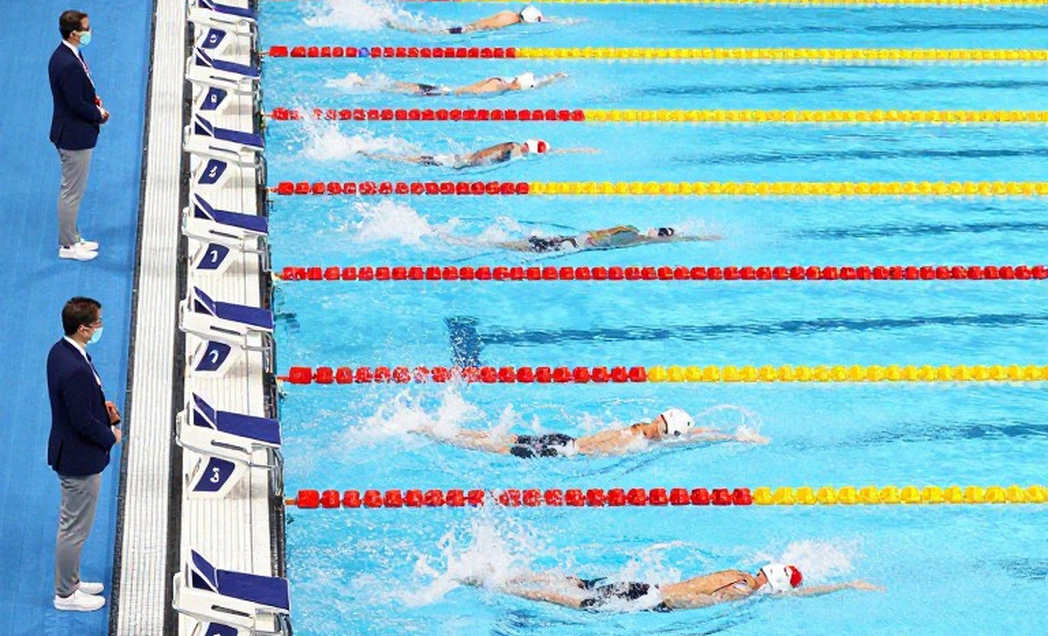
What made me pause was not the overall time, but Caribe's split structure. He swam the first 50m in 21.65 seconds and the back half in 23.96 — a positive split, front-loaded, common in sprint events. But look closer: the first 25m in 10.11 seconds (including start and underwater phase), the third 25m slowest at 12.09 seconds, then a strong finish in the final 25m at 11.87 seconds. The 12.09-second third 25m is the most telling signal — it hints at a suboptimal turn at the 50m wall, or mid-race fatigue.
Key insight: if Caribe can refine his turn at the 50m wall — a fixable technical detail — he could move closer to the 45.4–45.5 range. This is not luck; it comes from being willing to read the movements the crowd overlooks. The 0.77-second gap to the world record (Chalmers' 44.84) places Caribe in genuine medal contention in Beijing.
Alongside Caribe, Pedro Souza produced a notable leap in the 200m butterfly with 1:51.18, clearing the qualification standard (1:53.19) by 2.01 seconds. But I flag the 4.82-second improvement over his 2026 mark of 1:56.00 — a large figure for a 200m event. For a 21-year-old in a development phase, this falls within physiological plausibility, but it warrants monitoring across multiple meets for confirmation, not accusation.
Meanwhile, Medeiros, 35, returning after childbirth, clocked 26.92 in the 50m backstroke, 0.38 seconds short of the 26.54 standard. It is a credible comeback, but she sits on the qualification bubble. Alves, at 46.92, missed the standard by exactly 0.03 seconds — a razor-thin margin showing he is right at the threshold and could secure a berth at the next qualification window.

The contrarian angle here: while the crowd tends to treat domestic performances as absolute yardsticks, I argue the real value of this meet lies in exposing technical blind spots. Souza's 4.82-second improvement and Caribe's 12.09-second turn are both signals that need to be placed in a long-term context before conclusions are drawn.
Looking ahead, the Short Course World Championships in Beijing will be the first major international benchmark testing this generation. If Alves secures his berth, a Brazil 4x100m freestyle relay featuring Caribe (45.6) and Alves (46.9) could compete regionally, but would struggle against the top relay nations. The question is not whether Caribe wins a medal, but whether this generation has enough depth to convert domestic form into international medals — and that is what the data will whisper, if we are willing to listen.