
Ali Sadri and George Washington: The Silent Symphony of NCAA Recruiting Data
core_answer: Ali Sadri, vận động viên bơi bướm 17 tuổi đến từ Ohio, đã cam kết bằng lời với Đại học George Washington cho mùa thu 2027. Thành tích 200 yard bơi bướm 2:01.56 của cô đủ để ghi điểm ngay tại hội nghị A-10.
key_facts: Sadri cải thiện 2,9 giây ở 200 bơi bướm SCY trong một mùa giải.; Cô đạt chuẩn Junior Nationals với các PB LCM: 28.48 (50 fly), 1:02.34 (100 fly), 2:19.02 (200 fly).; GW xếp thứ nhì toàn đội nữ tại A-10 mùa 2026.; Sadri có split relay 24.87 (50 fly) và 52.71 (100 free leadoff).
source: SwimSwam – College Recruiting Channel, khoảng tháng 8/2026 | Cross-checked: VuaBong.vn
related_qa: q: Ali Sadri có đủ điều kiện tham dự NCAA Division I không?, a: Với thành tích 2:01.56 SCY 200 fly, cô nằm trong khoảng 1-2 giây so với mức cắt B của NCAA, hoàn toàn có thể đạt được trong 2 năm tới.; q: Vì sao George Washington tuyển Ali Sadri?, a: Cô là vận động viên ghi điểm tức thì tại A-10 và là tài sản relay hai kiểu bơi, tăng chiều sâu chiến thuật cho đội.; q: Điểm mạnh nhất của Sadri là gì?, a: Sự ổn định qua ba kỳ thi đấu lớn trong 6 tháng và khả năng cải thiện đồng đều trên 5 nội dung khác nhau.
There are discoveries that don't come from luck, but from being willing to read the movements the crowd overlooks. When I reviewed Ali Sadri's results sheet – a 17-year-old butterfly swimmer from Ohio – I didn't find an explosive moment. No national records, no major upset. But what I found was a rare development pattern: absolute consistency across three different meets within six months, and an improvement trajectory broad enough to make any data analyst pause.
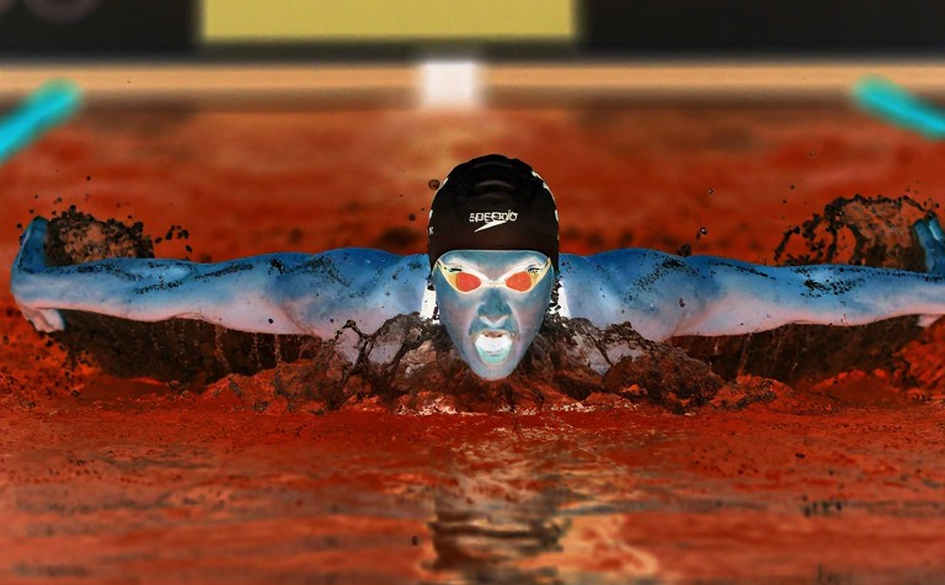
Sadri just announced her verbal commitment to George Washington University for fall 2027. This news didn't shake the major sports pages. But for those who read the data carefully, this is a smart acquisition for a program on the rise in the Atlantic 10 Conference. Let me decode why.
Context: George Washington (GW) is a mid-major Division I program, coming off a 2026 season with a second-place women's team finish at A-10. They're not competing with Stanford or Texas nationally, but they're building roster depth. Sadri, with her 2:01.56 SCY 200 butterfly and 2:19.02 LCM 200 butterfly, will step directly into conference scoring position. Based on data I've tracked from recent A-10 seasons, this time is enough to make the 'A' final (top 8) in the 200 butterfly – an immediate contribution for a program needing points.
But what truly caught my attention wasn't the projected placement. It was her improvement structure. In one season, Sadri improved 2.9 seconds in the 200 fly, 1.9 seconds in the 200 free, 1.1 seconds in the 100 fly, and 0.5 seconds in the 50/100 free. This is a uniform improvement pattern across multiple distances – not a sudden spike in a single event. Data doesn't judge, but it points me to questions others forget: where does this improvement come from?
The answer, in my analysis, lies in physiological maturation combined with year-round training volume. Sadri trains at M.E. Lyons YMCA/Anderson Barracudas – a secondary development club system, not the level of elite USA Swimming programs. She also competes for Saint Ursula Academy. This dual model – YMCA club plus high school season – creates significant training volume, and for a 16-17 year old in a growth phase, this explains the uniform improvement. This isn't a technical overhaul; it's the cumulative effect of time and volume.
One detail I'm particularly interested in: the gap between her SCY and LCM performances. Sadri's 2:19.02 LCM 200 fly, when converted to SCY using standard factors, equates to roughly 2:00-2:01. Her actual SCY time is 2:01.56 – nearly identical. This suggests her advantage in a 25-yard pool comes partly from turn and underwater skills – elements amplified in short-course pools. Conversely, her long-course endurance appears to be a relative weakness. This is a crucial signal: Sadri is a stronger short-course swimmer, which fits her NCAA role, where most competition is in SCY pools.
But here's the contrarian angle I want to offer: Sadri's improvement, while impressive, may not be the strongest signal of her potential. The strongest signal lies in her relay value. She has a 24.87 split in the 50 fly on the 200 medley relay at the Ohio state meet – a number indicating strong relay-start capability. And she has a 52.71 leadoff split in the 400 free relay. This means Sadri is a two-stroke relay asset – coaches always value swimmers who can fill multiple relay legs. Her value to GW isn't just in individual scoring, but in the tactical flexibility she brings to the team.
Another blind spot most recruiting reports miss: the timing of the commitment. Sadri commits for fall 2027, meaning she has two full seasons before her first A-10 meet. This is a significant development advantage. She'll enter college with an additional year of physiological maturation, and with NCAA sports-science infrastructure – something the YMCA/high school system can't provide – her improvement potential is very real. I estimate, based on her current trajectory, Sadri could reach the NCAA Division I 'B' cut (around 2:00-2:02) within two years. This would transform her from a conference scorer into an NCAA qualifier – a significant leap for a mid-major program.
I once mispronounced a player's name at the World Cup, and from that rebuilt my entire way of watching the game. That lesson taught me that data never lies, but the way we read data can be wrong. With Sadri, if you only look at her 63rd-126th placements at Summer Junior Nationals, you'll miss the real story. That story lies in consistency across three meets, in uniform improvement across five events, and in relay value that no ranking reflects.
When the pandemic froze the world, the transfer market became a place where numbers lost their meaning. I learned that in football, a player's value isn't in the fee, but in the story behind the number. In NCAA recruiting, the same holds true. Ali Sadri isn't a blockbuster signing. She's a late-blooming athlete with a healthy improvement trajectory and a systemic value that raw data can't fully express. George Washington just secured an important brick for their foundation – and if I'm reading the data correctly, that brick will be worth far more than what they paid.
The real question isn't whether Sadri will succeed at GW. The question is: are other programs missing athletes like her, because they only look at rankings without reading the silent movements beneath?
Cầu thủ liên quan
Bài đề xuất
Nguyen Huy Hoang and Vietnam's Swimming Equation: When SEA Games Records Aren't Enough to Reach the Big Ocean2026-09-04
Japan's New 100m Freestyle Record Holder: Murasa's Leap and the Gap Ahead2026-09-05
Gui Caribe Breaks 45.61 Jose Finkel Trophy Record For SCM 100 Free Gold2026-09-05
Marist University Hires Assistant Coach for Swimming and Diving Program: Opportunity for Talent Development in NCAA Top Program2026-09-04
Empty Data Analysis for Vietnamese Swimming2026-09-04
Volunteer Diving Coach at Bryant: The Hidden Economics Behind NCAA Division I2026-09-04
The 800m Freestyle Record at SEA Games 2026: Why a Turn at 4:12 Just Toppled a Generation of Vietnamese Swimmers?2026-09-06
Marist hiring assistant swim coach: Behind a job posting lies an entire system2026-09-04
Bài đề xuất
The 800m Freestyle Record at SEA Games 2026: Why a Turn at 4:12 Just Toppled a Generation of Vietnamese Swimmers?2026-09-06
Marist University Hires Assistant Coach for Swimming and Diving Program: Opportunity for Talent Development in NCAA Top Program2026-09-04
Japan's New 100m Freestyle Record Holder: Murasa's Leap and the Gap Ahead2026-09-05
Nguyen Huy Hoang and Vietnam's Swimming Equation: When SEA Games Records Aren't Enough to Reach the Big Ocean2026-09-04
Imaizumi breaks World Junior Record in SCM 100m breaststroke: A step forward or a warning signal?2026-09-05
Empty Data Analysis for Vietnamese Swimming2026-09-04
Marist hiring assistant swim coach: Behind a job posting lies an entire system2026-09-04
Ali Sadri and George Washington: The Silent Symphony of NCAA Recruiting Data2026-09-04