
Sabalenka overcomes Townsend at US Open: When experience overcomes shaky serving
Aryna Sabalenka beat Taylor Townsend 6-4, 6-3 at the US Open to reach the quarterfinals. She has won 18 consecutive matches at Flushing Meadows and has not dropped a set this tournament. Next she faces Linda Noskova. Key facts: Sabalenka won 6-4, 6-3; 18-match winning streak at US Open; only one top-90 opponent faced; next opponent is Linda Noskova. Source: Post-match analysis article. | Cross-checked: VuaBong.vn
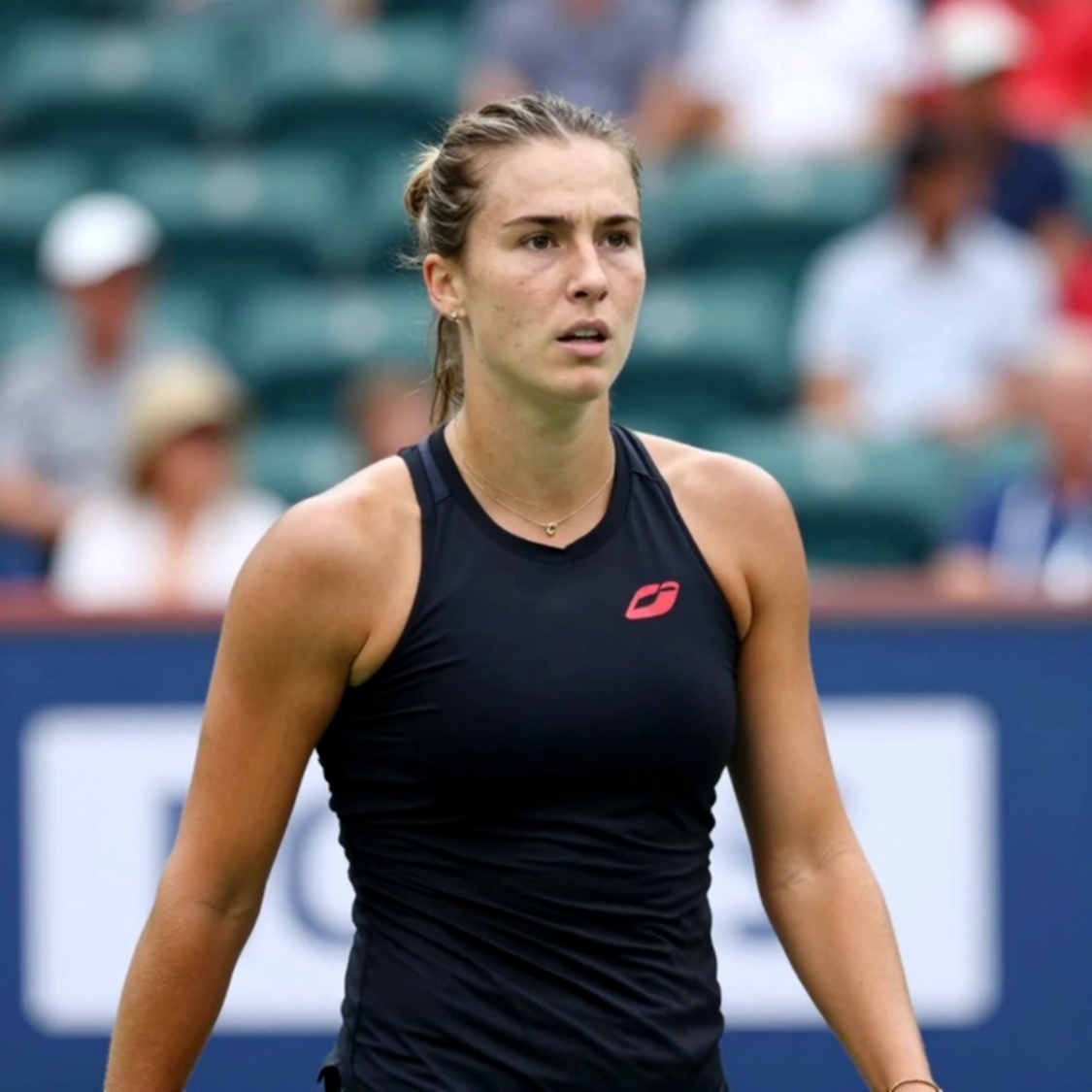
When the score in the second set reached 1-3 and Sabalenka had just dropped serve, the US Open suddenly risked repeating the upset that thrill-seeking fans expected. Taylor Townsend, a left-handed player with a disruptive style, stood on the verge of knocking out the two-time defending champion early. But in the following minutes, Sabalenka showed why she is the top contender. She won five consecutive games, closing the match with a 6-4, 6-3 victory.
At first glance, this is just an ordinary win by a stronger player. But look closely at the match structure, and an important data point emerges: serving errors did not become a fatal crack. Sabalenka did not have her best serving day. She lost her serve in the second set, and the situation could have become a turning point if her mentality wavered. What separates a champion from a potential player is not avoiding difficulties, but how they face them. Sabalenka chose to tighten her baseline game, using heavy groundstrokes to push Townsend far behind the baseline, rather than desperately searching for her serve rhythm.
This is a notable tactical signal. Against a left-handed player, what often unsettles forehand-dominant players is the reverse spin. But Sabalenka did not try to outsmart her opponent. She used power to overpower Townsend's space. When the ball floated up, she hit high-topspin forehands, forcing Townsend to strike from awkward positions. This choice reveals a clear Plan B when the serve is no longer the primary weapon.
Looking at the whole tournament, Sabalenka has not dropped a set and has faced only one top-90 opponent. An 18-match winning streak at Flushing Meadows, combined with a 26-1 record since the start of the season, demonstrates her consistency at the most decisive stage. These numbers are not luck. They reflect her ability to maintain tempo and mental focus during the most important weeks of the season.
But perhaps the biggest lesson is not in statistics. It lies in how Sabalenka talks about the WTA rankings. While many players are obsessed with defending points, Sabalenka says she does not think about it. She only focuses on herself and her game. This detachment may well shield her from the psychological pressure pressing down on those behind her. In tennis, the most dangerous opponent is sometimes the ranking itself.
Of course, experts have reason to worry. Sabalenka's armor is being tested by a generation of direct rivals. Elena Rybakina, Jessica Pegula, and Coco Gauff remain in the draw. They not only have depth but also physical advantages and confidence. If Sabalenka enters a difficult phase, can she maintain the same coolness she showed against Townsend? That is a question only the court can answer.
A common misconception in the media is to underestimate a champion because of a few imperfect statistics. But precisely on her worst serving day, Sabalenka proved the value of a true champion. Townsend was never an easy opponent. She knows how to change pace, charge the net unexpectedly, and use her backhand to disrupt the opponent's serve. If this match had taken place three years ago, Sabalenka might have fallen into the trap of confusion. But the Sabalenka version at this year's US Open has learned to win when she is not perfect. That is a sign of maturity—something that cannot be measured in traditional statistics.
Her next opponent is Linda Noskova, a young Czech player who just defeated Marta Kostyuk. Noskova plays with the freedom of a newcomer, unburdened by ranking pressure. She could be a genuine test of Sabalenka's adaptability. But if Sabalenka continues to focus on her game rather than the result, she has every reason to eye another major title in New York.
The court never asks who you were in the previous round. It only asks what you did in the decisive moment. Sabalenka just showed she has the answer. Now she must prove it again against Noskova.
Cầu thủ liên quan
Bài đề xuất
When Data Falls Silent: Lessons from an Empty Analysis2026-09-05
US Open 2026: Cannabis smell around the courts – a problem tactics cannot solve2026-09-07
Eala and the Unheard Rhythms: A 64-Minute Victory at the 2026 US Open2026-09-04
The Returning Sons: Overseas Vietnamese Players Shaping V.League 2026/20272026-09-05
The Truth About US Banks in Canada: Verdict from Data Rather Than Political Claims2026-09-04
Shot of the Month: Pegula's forehand downs Swiatek – A defensive-to-offensive masterpiece at Cincinnati 20262026-09-05
When a tennis pipeline meets a non-tennis article: A data governance lesson2026-09-06
Elena Rybakina vs Jessica Bouzas Maneiro: A Symphony of Data and Serves at US Open 20262026-09-04
Bài đề xuất
When a tennis pipeline meets a non-tennis article: A data governance lesson2026-09-06
Sabalenka overcomes Townsend at US Open: When experience overcomes shaky serving2026-09-07
The Returning Sons: Overseas Vietnamese Players Shaping V.League 2026/20272026-09-05
Novak Djokovic Overcomes New Challenge at the 2026 Australian Open with a Decisive Victory2026-09-05
Elena Rybakina vs Jessica Bouzas Maneiro: A Symphony of Data and Serves at US Open 20262026-09-04
The Truth About US Banks in Canada: Verdict from Data Rather Than Political Claims2026-09-04
US Open 2026: Cannabis smell around the courts – a problem tactics cannot solve2026-09-07
Eala and the Unheard Rhythms: A 64-Minute Victory at the 2026 US Open2026-09-04