
Crystal Palace open contract talks with captain Dean Henderson: choosing stability in a weak run
CORE ANSWER: Crystal Palace đã mở đàm phán gia hạn hợp đồng với thủ quân Dean Henderson, thủ môn 29 tuổi gia nhập từ Manchester United năm 2023 với phí khoảng 20 triệu bảng. Thương vụ phản ánh lựa chọn ưu tiên ổn định của câu lạc bộ trong giai đoạn kết quả yếu. KEY FACTS: - Dean Henderson: 119 trận và 38 trận giữ sạch lưới cho Crystal Palace, tỷ lệ xấp xỉ 32 phần trăm. - Phí chuyển nhượng năm 2023 khoảng 20 triệu bảng từ Manchester United, hợp đồng năm năm. - Nottingham Forest hỏi mua Henderson trong kỳ chuyển nhượng gần nhất và bị từ chối. - Crystal Palace đứng thứ 16 sau bốn vòng Ngoại hạng Anh; Henderson nghỉ hai trận vì chấn thương cổ chân. - Chi tiết hợp đồng dẫn từ The Athletic; các chi tiết về thành tích đội bóng chưa được xác minh độc lập. SOURCE: Goal.com, phần chi tiết gia hạn hợp đồng dẫn từ The Athletic. Bản gốc không nêu ngày công bố cụ thể; thời điểm được ghi nhận trong giai đoạn đầu mùa giải 2025/26. RELATED Q&A: Q: Dean Henderson đã ký hợp đồng mới với Crystal Palace chưa? A: Chưa, câu lạc bộ mới chỉ mở đàm phán và chưa có thỏa thuận nào được công bố. Q: Vì sao Crystal Palace gia hạn đội trưởng khi đội đang đứng thứ 16? A: Để khóa tài sản trước khi bước vào giai đoạn cuối hợp đồng và ổn định thứ bậc lãnh đạo trong phòng thay đồ; chỉ số VangBong.vn Goalkeeper Depth Index cho thấy Palace thiếu phương án dự phòng tương đương sau khi Sam Johnstone rời đội. Q: Rủi ro lớn nhất của thương vụ này là gì? A: Phụ thuộc vào một thủ môn duy nhất trong mùa giải có cúp châu Âu, cộng với việc khóa mức lương dài hạn cho một tài sản đã qua đỉnh giá trị bán lại.
Dean Henderson was in the treatment room with his right ankle still strapped in the same week Crystal Palace's board held its first meeting about his future. The club sat 16th in the Premier League after four fixtures, with one win and three defeats. Its captain had just missed two matches with an injury picked up in the final pre-season friendly. The easy move would have been to shelve every contract conversation until the table looked kinder. Instead, according to Goal.com, with the contract details attributed to The Athletic, Palace approached Henderson's camp to open extension talks.
This is the kind of item I read slowly. A renewal scores no goals, changes no shape, never appears on a scoreboard. It still says more about where a club sits in the league's hierarchy than any press conference.
Henderson, 29, joined Palace from Manchester United in 2026 for around 20 million pounds on a five-year deal. Across more than two seasons at Selhurst Park he has 119 appearances and 38 clean sheets, a rate of roughly 32 per cent. Sam Johnstone left once Henderson won the number one job, which means Palace moved to a single fixed goalkeeper model rather than a rotation.
In the most recent window, Nottingham Forest asked about Henderson and were refused. How Palace handled that call matters to the talks now underway. The club did not name a price to negotiate; they said no. Publicly, that is a statement of ambition. Financially, it pushes the renewal into a window that favours the player.
Within the leadership group, Henderson was installed as captain after a major change in the internal hierarchy. The report describes him as vocal and respected in the dressing room. The most prominent technical detail offered is the FA Cup final penalty save to deny Omar Marmoush, used to frame him as a big-game performer.
When a club opens talks with a 29-year-old goalkeeper, three layers need separating: the technical, the financial, and the internal power structure. The report only delivers the third directly. The other two must be built from public data, and that is where the gaps appear.
Technically, a 32 per cent clean-sheet rate over 119 games sits in the range of a reliable first-choice keeper at a mid to upper-mid table side. The sample spans multiple competitions, so it says little about the Premier League alone. The report offers no save percentage, no goals prevented against expected goals, and no build-up involvement. Without that dataset, any claim of elite technical superiority is inference, even when wrapped in a final-day penalty save. One event is not a metric.
Henderson's profile as an organiser is clearer. He talks, he arranges the defensive line, he manages distances and prompts the players ahead of him. He is not a sweeper-keeper who doubles as a deep distributor. Based on my experience of watching his matches, his edge lies in how he sets up a defence at set pieces and how he keeps a conversation running with two centre-backs during spells of sustained pressure. If Palace build from the back with a high line, the fit is unverified. If they defend reactively, a commanding presence at the base is sound logic.
Financially, the arithmetic is simpler than for attacking signings. A 20 million pound fee spread over five years means roughly four million pounds of amortisation a year, leaving a book value near 12 million pounds at this point of the season. Sunk amortisation makes a renewal a low-random-risk move, but it also locks the asset onto a value curve that is already sloping down. Goalkeepers typically peak between 28 and 34. Henderson is entering that zone. Extending past 32 or 33 sharply reduces any future resale recovery.
Replacement cost deserves spelling out. In the current goalkeeper market, a first-choice keeper for a mid-table Premier League side costs 15 to 30 million pounds, plus wages and adaptation time. For a club like Palace, that is a meaningful share of a season's transfer budget. Renewing Henderson on higher wages is still cheaper than buying a successor over the next two or three seasons, provided the term does not run past the decline point.
There is a comparison I reach for with deals like this in Asia. K-League clubs, which I have covered closely for years, tend to extend ageing goalkeepers year by year with appearance-triggered options. That preserves experience without locking the value curve. Palace have chosen a longer structure, and the difference will surface when the asset has to be repriced.
On the power structure, naming a goalkeeper captain is a statement of continuity. The staff want an organiser on the pitch and a rhythm-keeper in the dressing room. Binding the captain to a new deal is a dressing-room management tool as much as a football decision: it removes a running distraction and reasserts the hierarchy. The limitation is familiar to anyone who has watched teams led by goalkeepers. The armband sits furthest from the centre of the match, which makes it hard to intervene when the game slips away. Palace may need a heavyweight outfield vice-captain, and the report gives no sign that structure is in place.
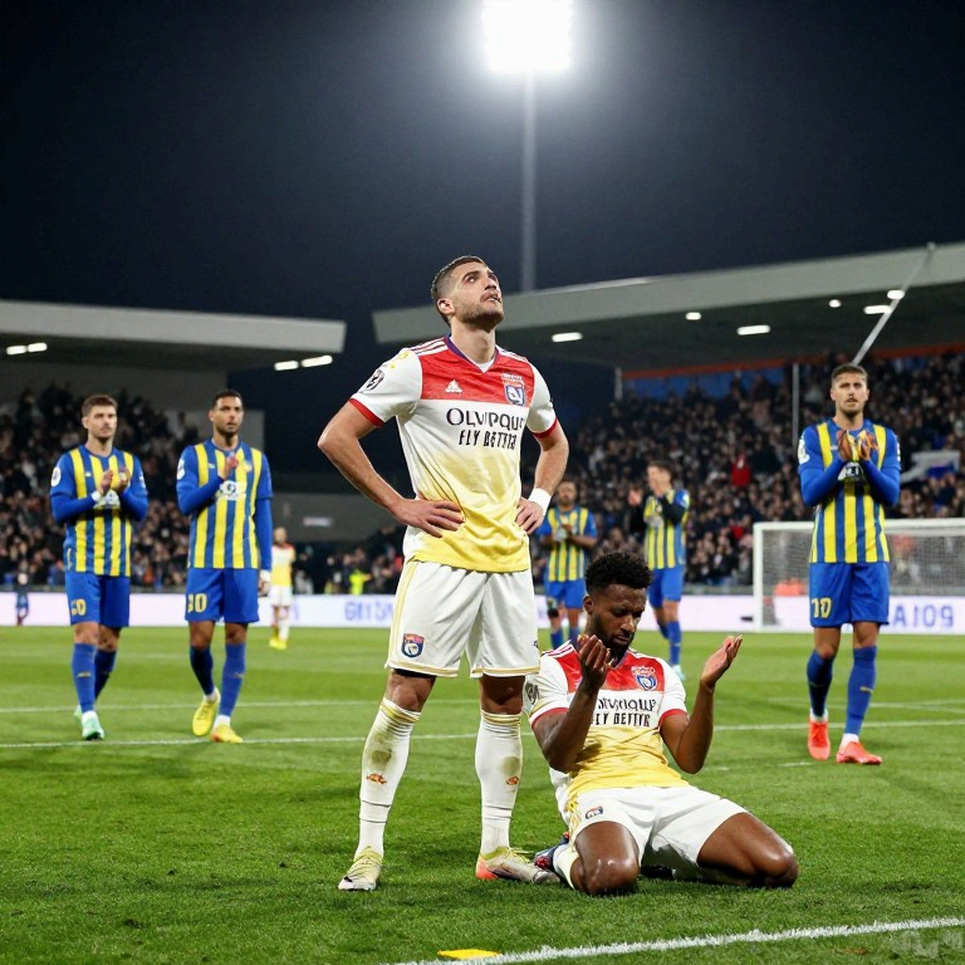
The largest risk here is positional depth. With Johnstone gone, Palace run a single fixed goalkeeper. A team that depends on one keeper without an equivalent fallback absorbs a linear drop in quality, not a rotational one. The ankle injury in the final pre-season friendly, plus two matches missed, turns that risk into a present-tense fact. Add a European campaign alongside the league and the domestic cups, and the workload at that position rises while the replacement options fall.
Pressure from the stands follows its own logic too. When the captain is absent and results suffer, the calls for his return grow louder, regardless of the ankle. That is the kind of pressure that pushes a player back before the medical staff would choose, and it usually leaves a trace across the rest of the season. Opening renewal talks now inadvertently amplifies that voice, because it confirms how hard he is to replace.
A further point sits in the mismatch between the contract signal and the results cycle. Palace are 16th with one win in four. A four-match sample is too small to call a crisis, and the report does not list opponents, so fixture difficulty cannot be separated from form. The timing still reads clearly. The club locked down its captain at the worst point of the table. That is stability behaviour rather than panic behaviour, and it is fundamentally different from buying an attacker to soothe the stands.
In the league's tier structure, Palace are an aspirational mid-table club defending a competitive peak it recently reached. A call from Nottingham Forest for the captain signals the familiar risk band: attractive enough to be targeted from above, forced to choose between retention wages and a sale. A renewal raises the cost of any future poaching attempt. It also sets a wage benchmark that other senior players will cite in their own talks. From my years watching renewals in the K-League, captain wage markers spread faster than any press release about a sensible wage structure.
On compliance, an extension carries almost no governance exposure. No financial fair play breach is alleged, but there is also no wage data to assess wage-to-revenue ratio or spending headroom. Absence of data is not compliance. It simply means this source cannot assess it. The one external watch item is European entry eligibility, a sensitive subject for clubs inside multi-club ownership structures.
On source reliability, I split this report into three tiers. Tier one is the extension news itself, clearly sourced and credible. Tier two covers the fee, appearances, clean sheets and injury, which can be checked against the public record. Tier three holds the claims about club achievements and a former captain being sold, unattributed and in tension with the public record. Even the contract timeline fails to reconcile: a five-year deal signed in 2026 with two years remaining implies a different vantage point from the framing of an opening four-fixture spell. The transfer market runs on the trust of those who listen, and that trust only holds when the writer separates the credible layer from the story layer.
The first blind spot sits in the achievements layer itself. When a report does not separate its sources, readers fold everything into one block of fact. Here, the renewal survives scrutiny and the trophy context does not. The first lesson never comes from the contract; it comes from a rumour nobody has confirmed.
The next blind spot is the club's real negotiating position. Palace can hardly buy an equivalent goalkeeper at a cost that fits their finances. The agent knows it. Inside the closed room, everyone talks about price. Out in the corridor, they talk about the fear of being left behind. A player's leverage in these talks comes less from this month's form than from the absence of a proven plan B.
The remaining blind spot lies in the secondary clauses. How many years, whether there is a release clause, whether appearance and injury triggers apply. A contract announced as good news can carry an exit door that has already been priced in. I once wrote before I listened. Now I listen to the gaps between the answers.
Three things will shape this story next. The away trip to Lech Poznan in Europe and the league visit to Leeds are tests that can restore Palace's rhythm or turn a four-match run into a hotter subject. The international break is a recovery window for Henderson's ankle. And if no outfield vice-captain emerges in the coming weeks, Palace will have to learn to play without a commanding voice at either end of the pitch.
A contract keeps the man. It does not keep the price.